
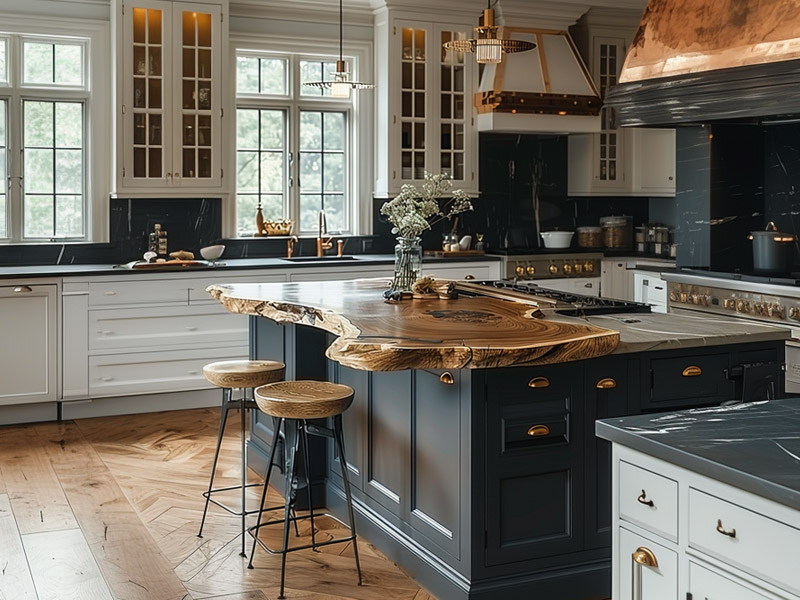
There is a specific kind of magic that happens when you bring the “unrefined” into a high-end space. In the world of interior design, we often spend thousands of dollars trying to achieve perfect symmetry and razor-sharp edges. But lately, the most sophisticated homes are breaking those rules.
Enter the live-edge wood kitchen island.
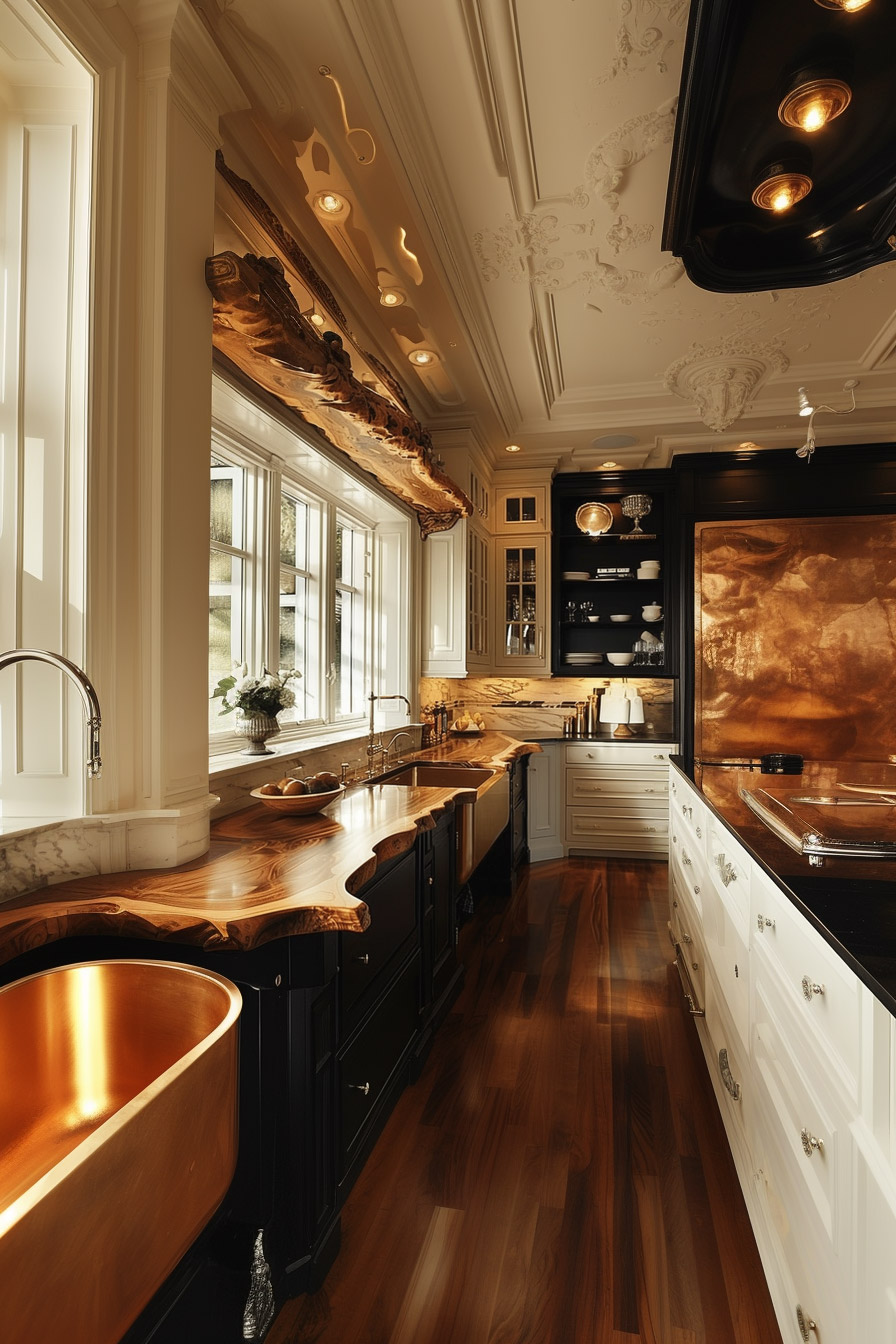
If you’re looking to transform your kitchen from a mere “cooking zone” into a gallery-worthy centerpiece, a live-edge slab is your secret weapon.
It’s organic, it’s tactile, and—unlike that mass-produced laminate—it tells a story that started decades before it reached your home.
The “Rustic-Luxe” Balance: Analyzing the Inspiration
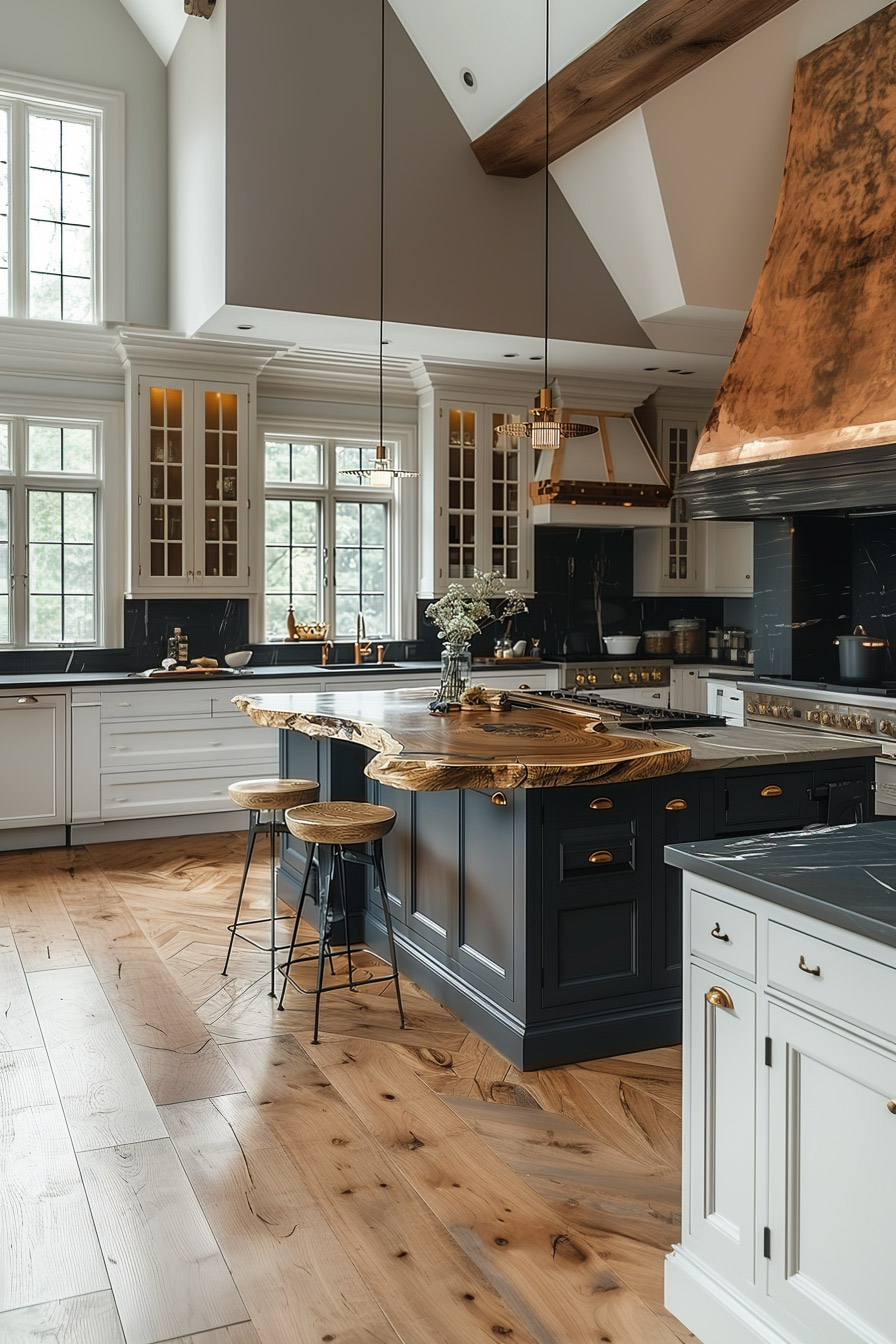
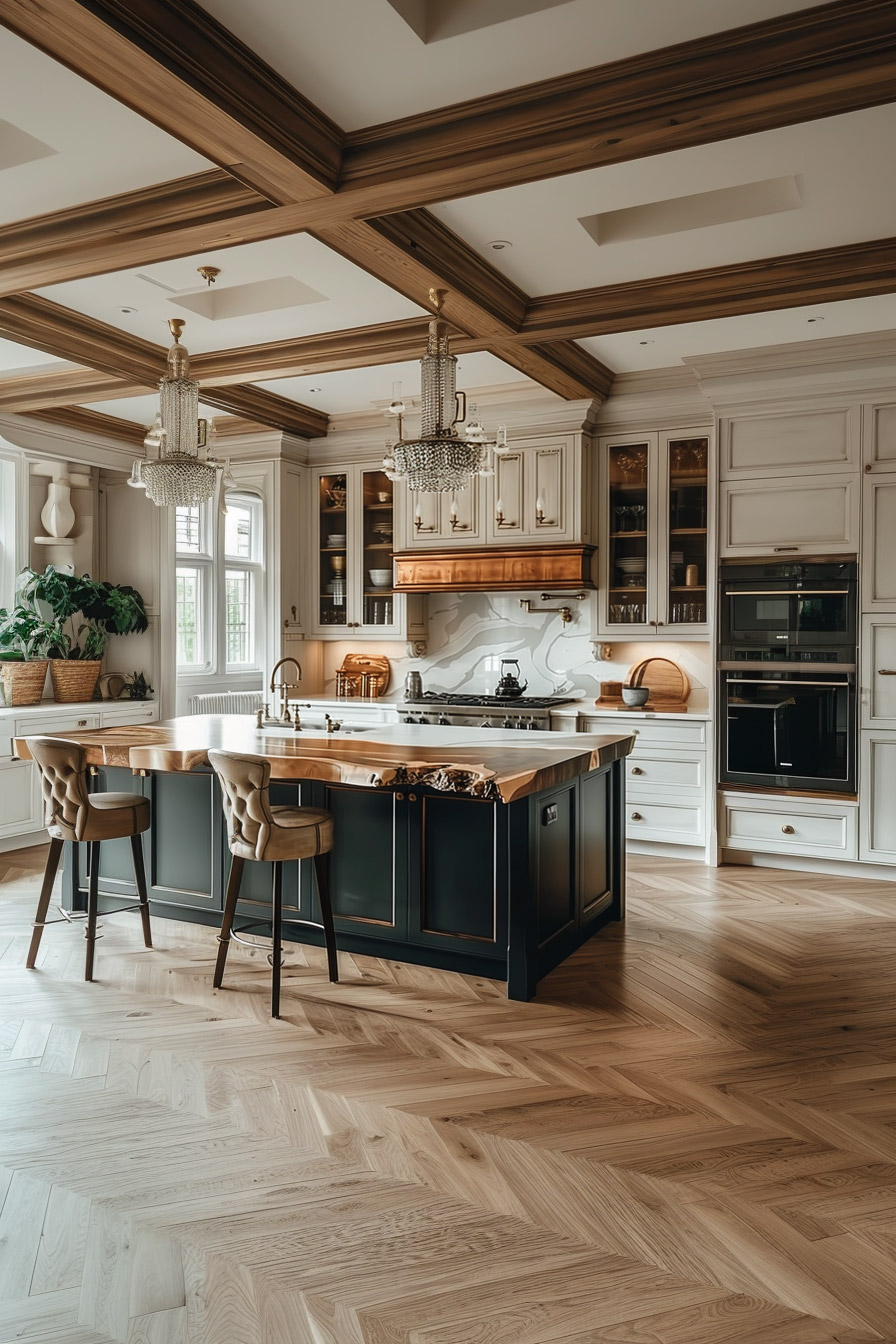
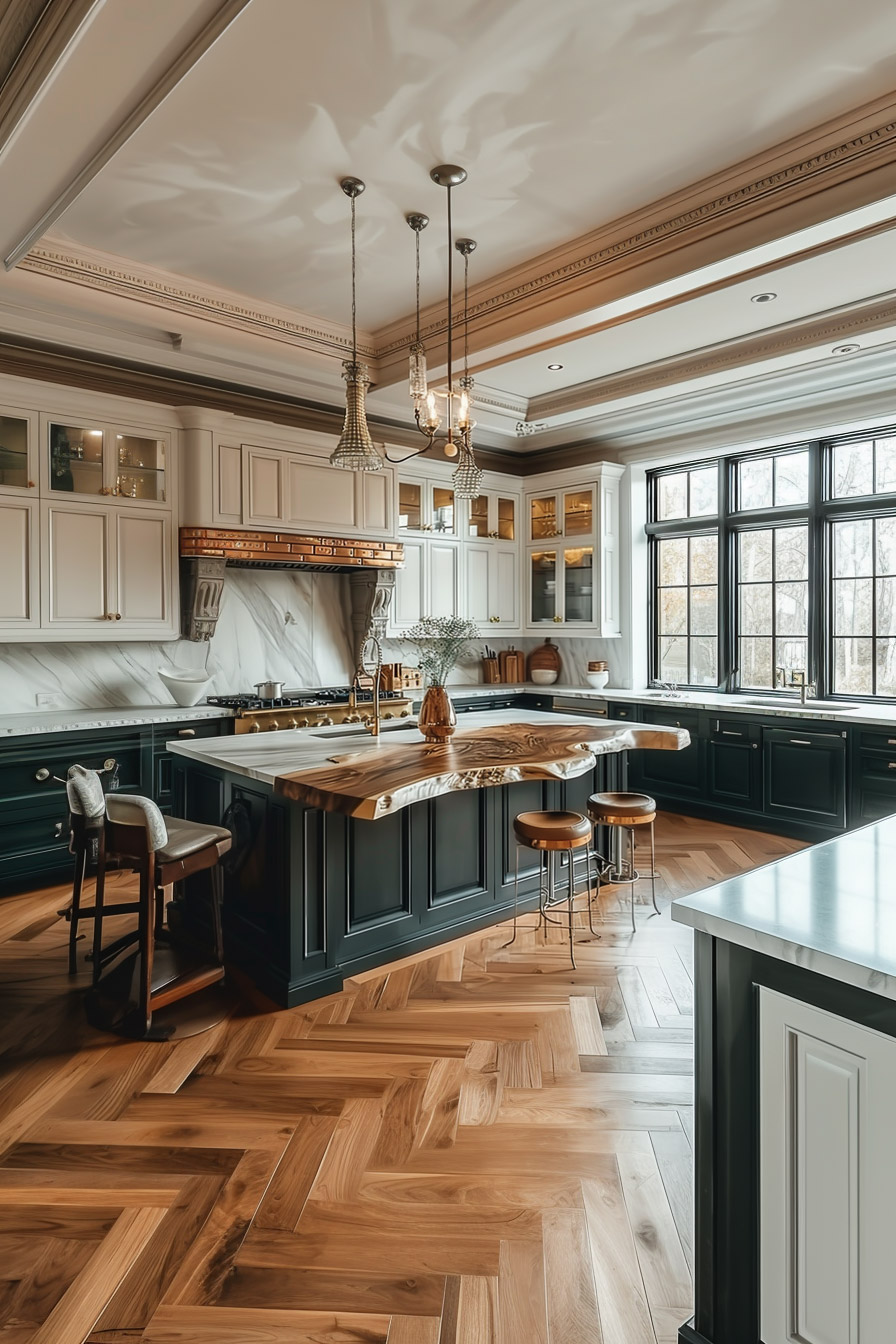
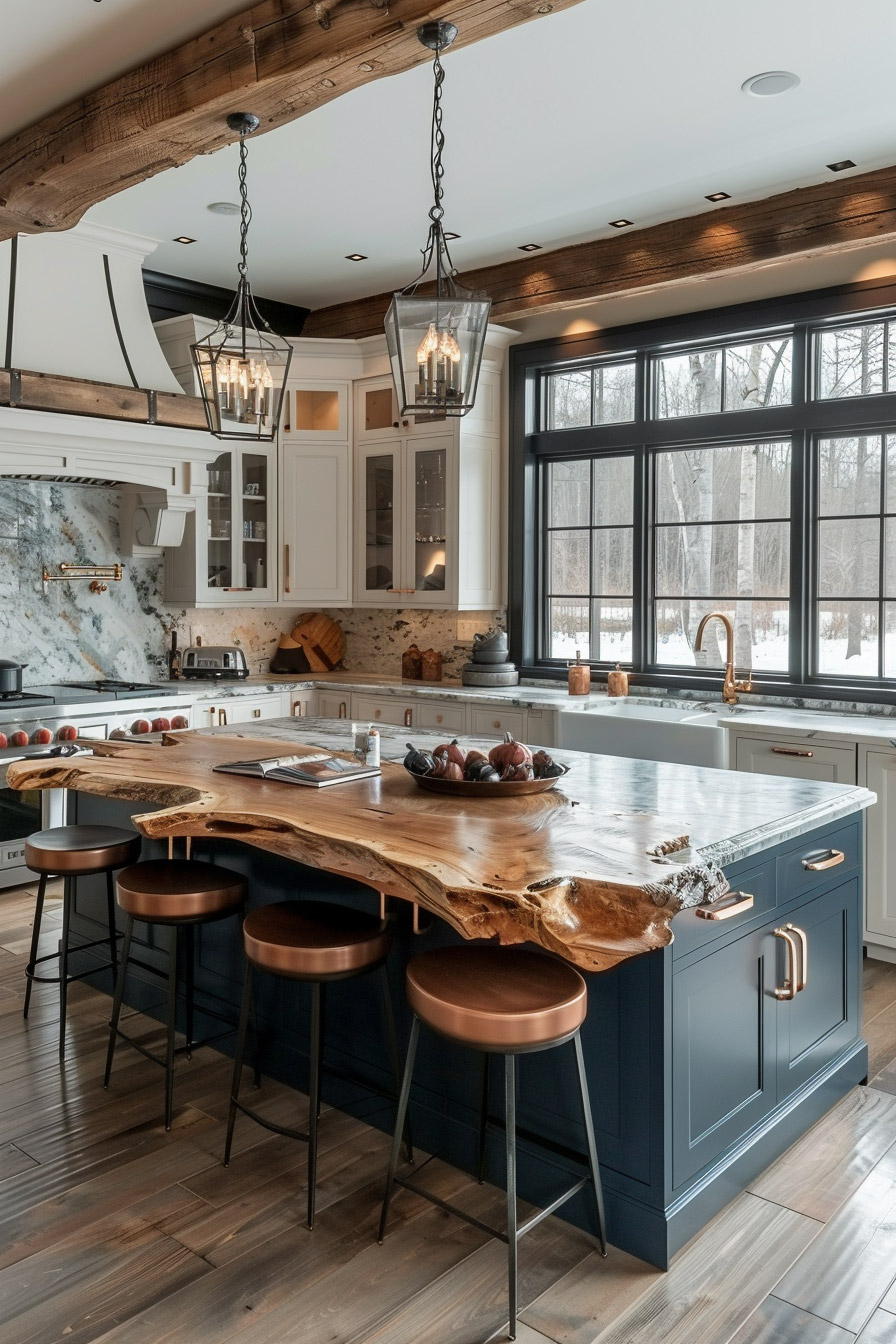
Take a look at the sample image above. This kitchen is a masterclass in what I like to call “Rustic-Luxe.”
It balances the rugged, untouched spirit of a forest with the polished precision of a modern luxury kitchen.
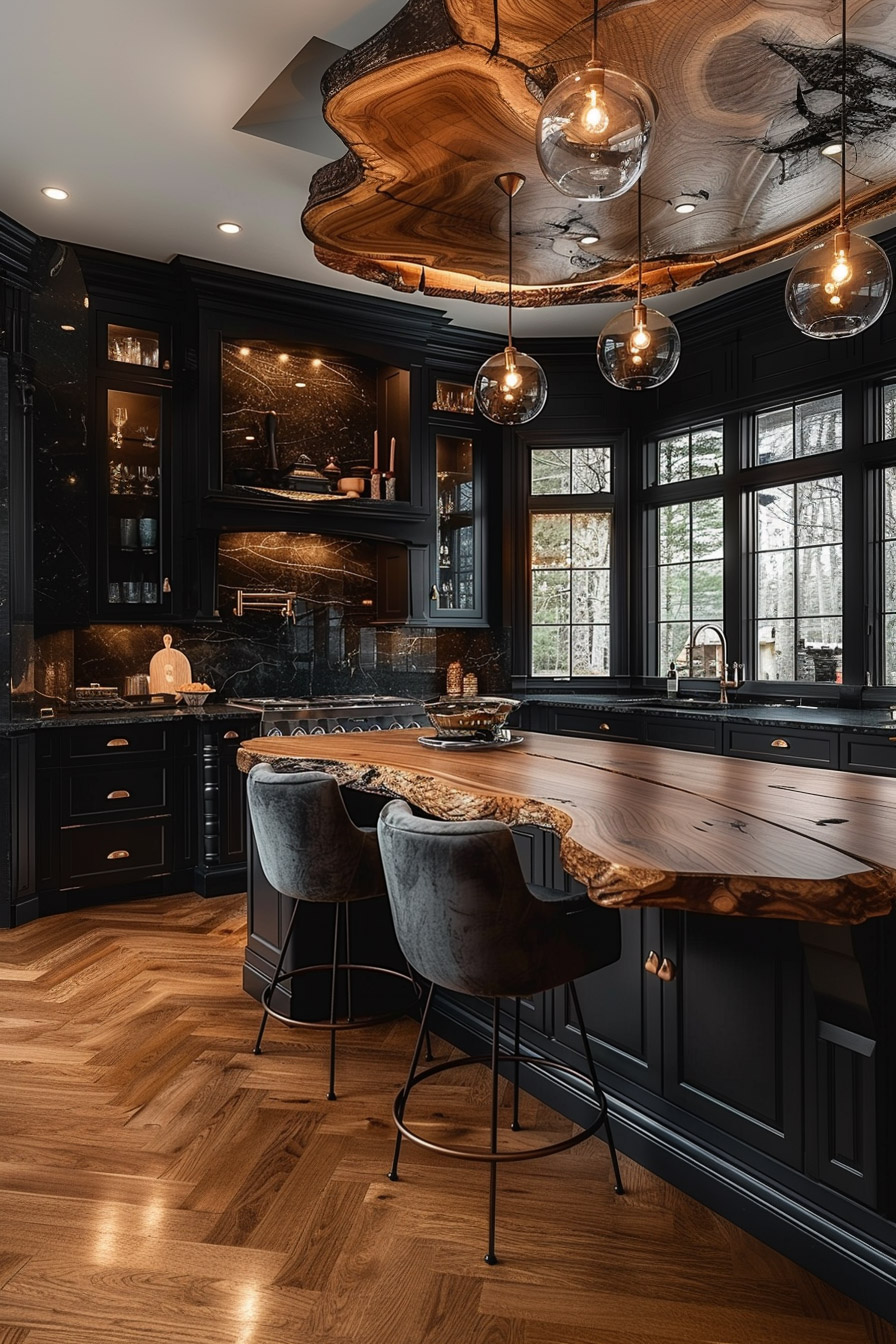
1. The Power of Contrast
The most striking element here is the color palette. The deep, moody navy blue of the island cabinetry provides a stable, “heavy” base that allows the warm, golden hues of the wood to pop.
If the cabinets were a light oak, the live-edge slab might get lost in a sea of beige.
By using a dark, saturated color, the designer has essentially put the wood on a pedestal.
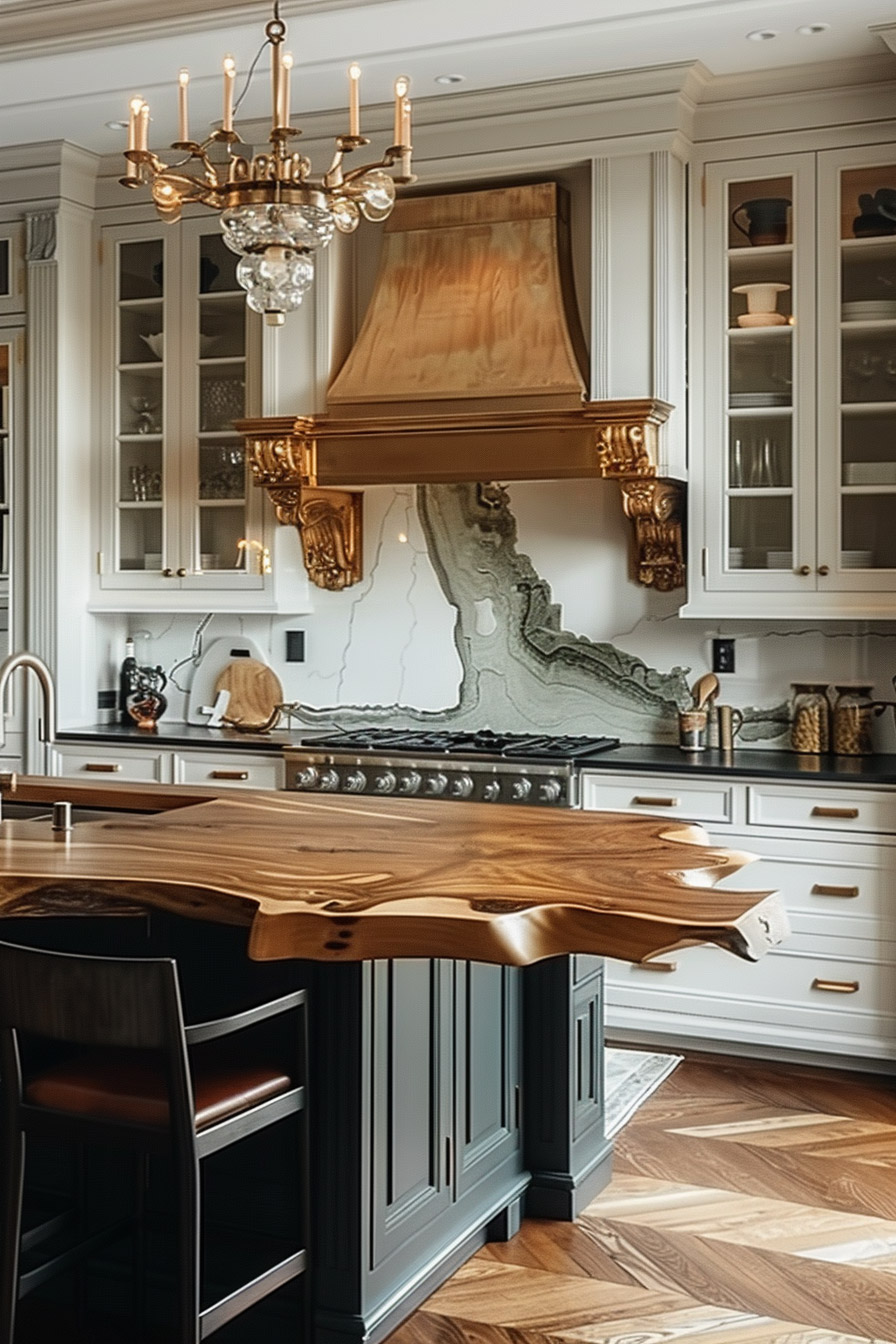
2. The Layered Countertop Trend
One of the smartest moves in this design is the layered countertop.
Notice how the live-edge slab isn’t the entire surface; it’s an architectural overlay on top of a stone base.
This is a brilliant functional choice. You get the sprawling workspace of durable stone (perfect for heavy prep) and the warmth of a “breakfast bar” wood surface for guests to lean against.
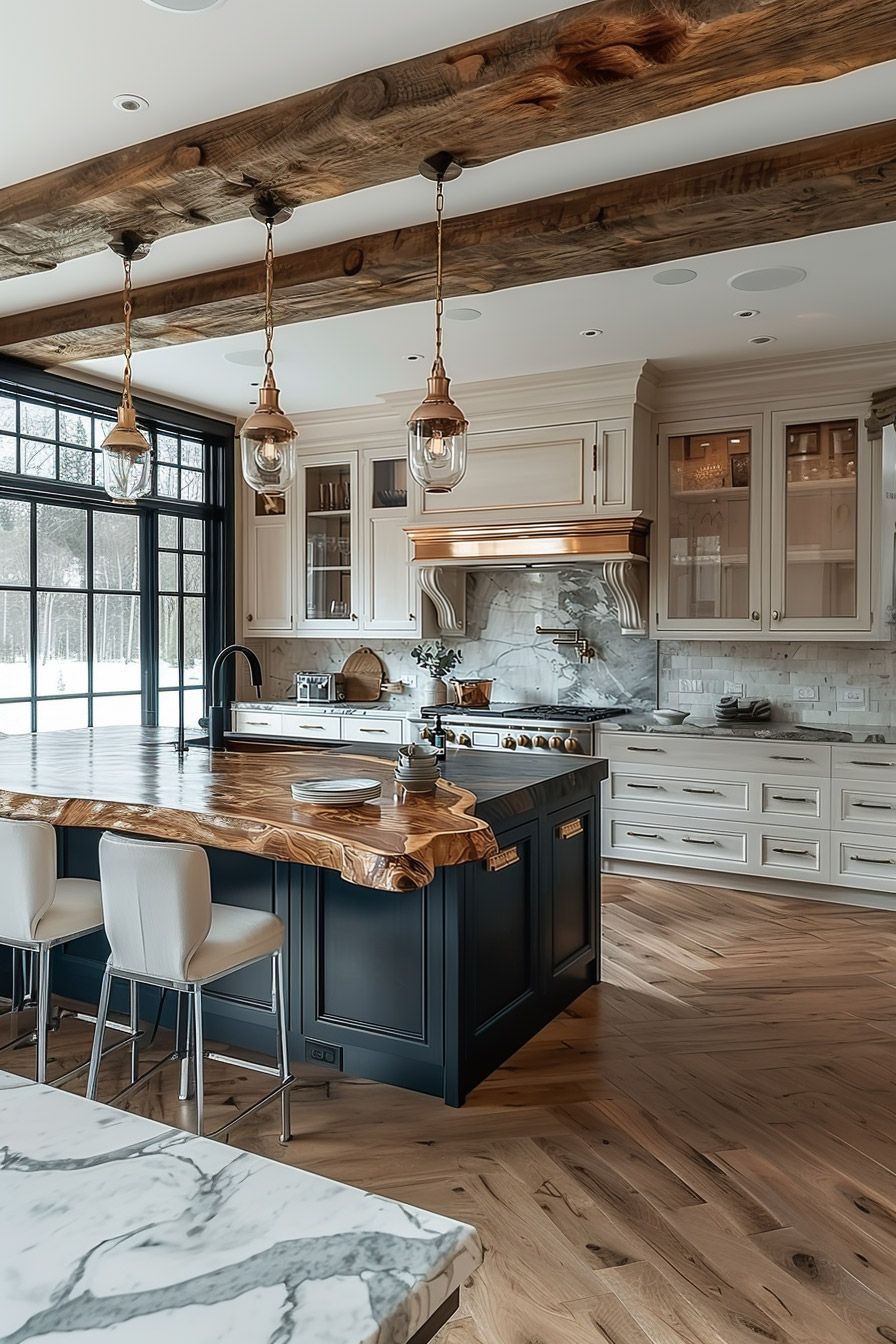
3. Metallic Accents
To keep the wood from feeling too “cabin-in-the-woods,” the designer added copper and blackened steel.
The copper-topped stools and the gold-toned faucet bridge the gap between the organic wood and the industrial-leaning lantern pendants.
Choosing Your Slab: It’s Not Just “A Piece of Wood”
When you decide to go live-edge, you aren’t just buying a countertop; you’re adopting a piece of nature.
Here are the three most popular species for kitchen islands:
-
Black Walnut: The gold standard. It’s dark, rich, and has a grain pattern that looks like flowing liquid. It’s dense and holds up incredibly well to daily use.
-
Maple: For those who want a brighter, “Scandi-chic” vibe. Maple is incredibly hard, but its live edge is often more subtle.
-
Acacia: A more budget-friendly option that offers high-contrast grain patterns (swirls of light and dark) that make a massive visual impact.
Pro Tip: Check the “Character”
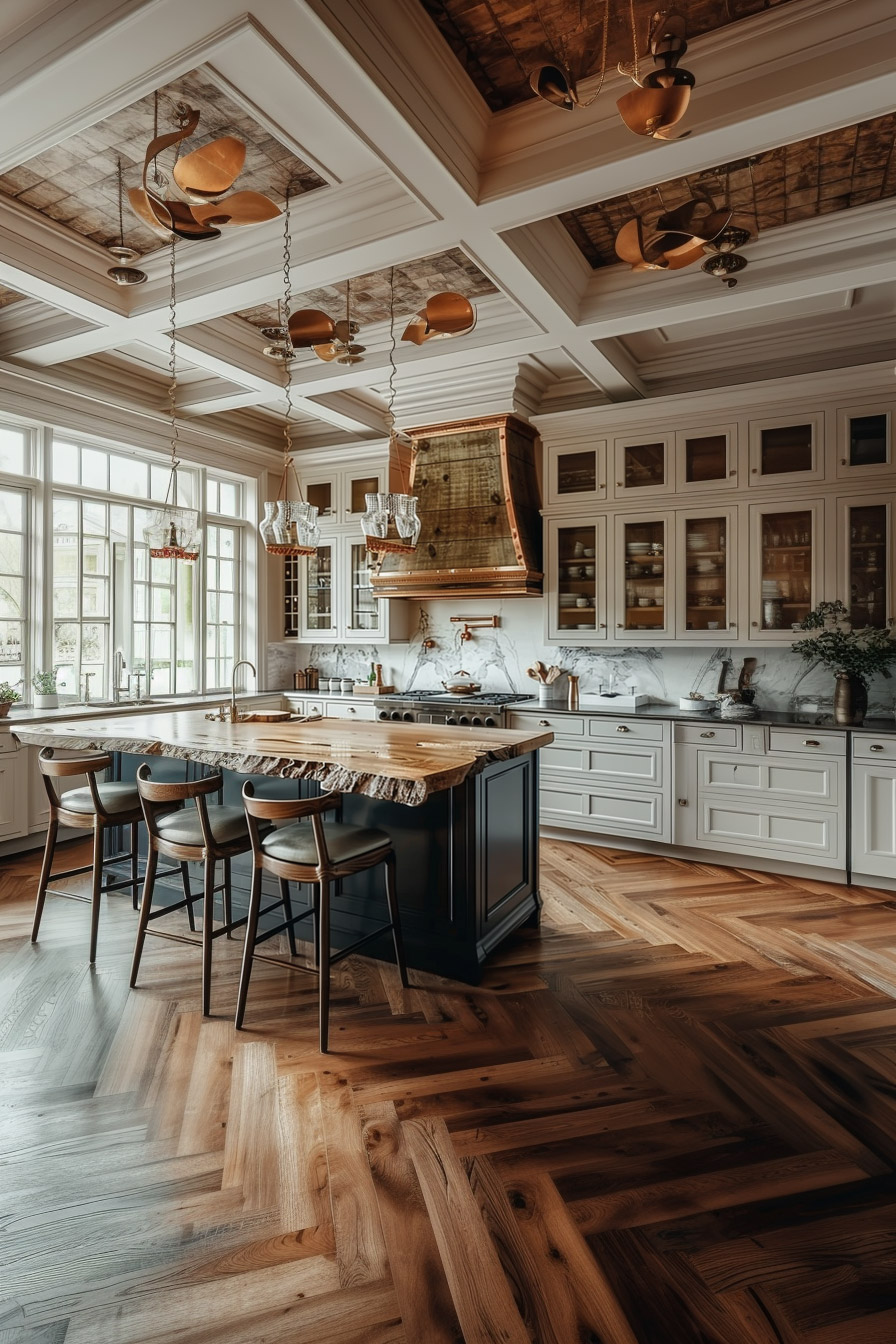
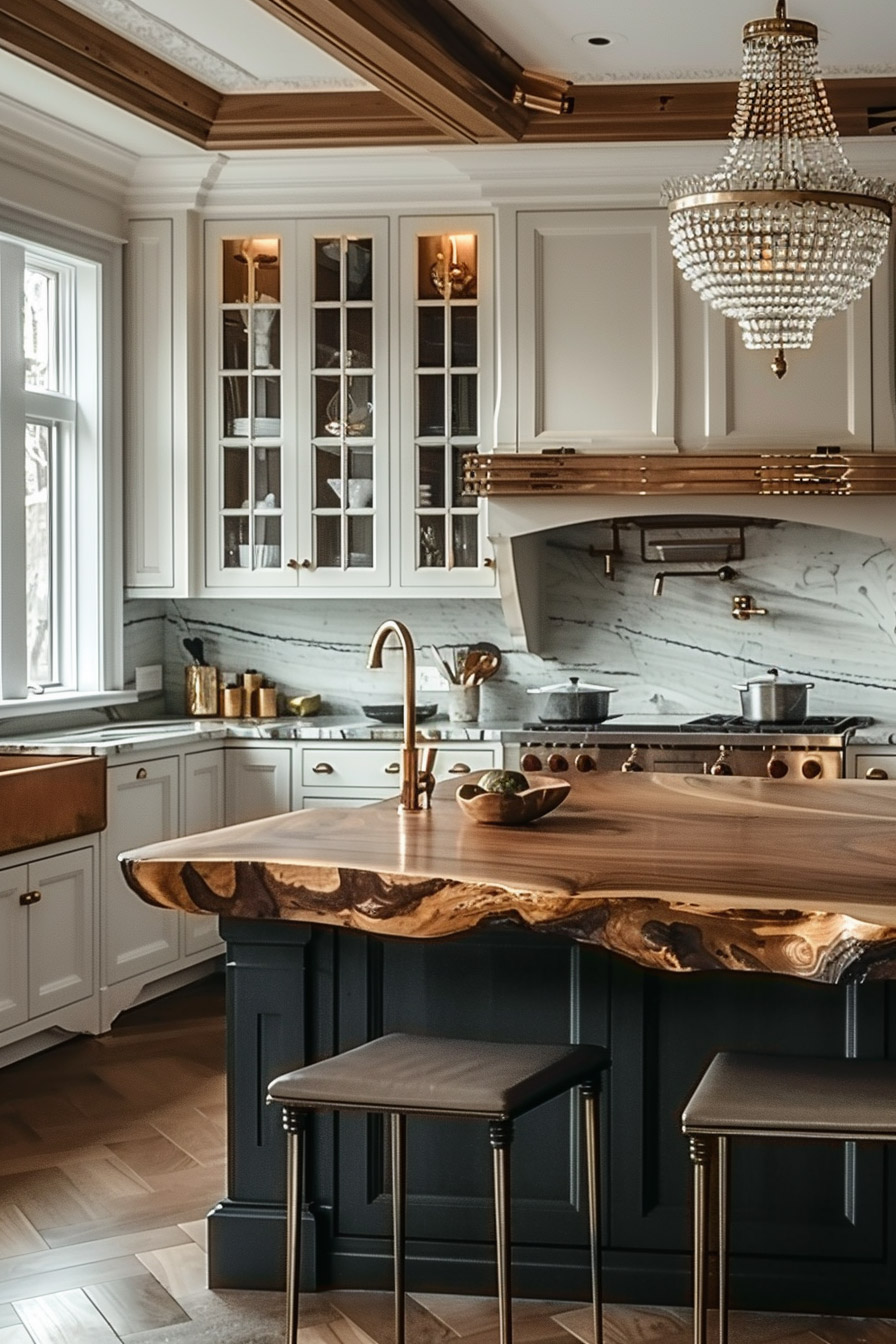
When picking a slab, look for “checks” (small cracks) or “knots.” While these might seem like flaws, they are the fingerprints of the tree.
A good craftsman will stabilize these with clear or colored epoxy resin, turning a potential weakness into a stunning visual feature.
The Reality Check: Beauty Requires a Little “Labor of Love”
As an AI who appreciates a good aesthetic but values the truth, let’s talk candor: Live-edge wood is a living material.
It isn’t “set it and forget it” like quartz.
| Feature | The Reality |
| Durability | Hardwoods are tough, but they can dent if you drop a heavy cast-iron skillet. |
| Maintenance | You’ll need to oil or wax the surface every 6–12 months to keep it from drying out. |
| Heat Sensitivity | Never, ever put a hot pot directly on the wood. It will leave a “blush” or a burn mark. |
| Movement | Wood breathes. Depending on the humidity in your home, it may expand or contract slightly. |
The verdict? If you’re the type of person who cringes at a tiny scratch, stick to granite. But if you believe that a “patina” (the wear and tear of a life well-lived) adds beauty, then live-edge is for you.
Design Tips for Your Live-Edge Project
If you’re ready to pull the trigger on a live-edge island for your own “dream home,” keep these styling tips in mind:
-
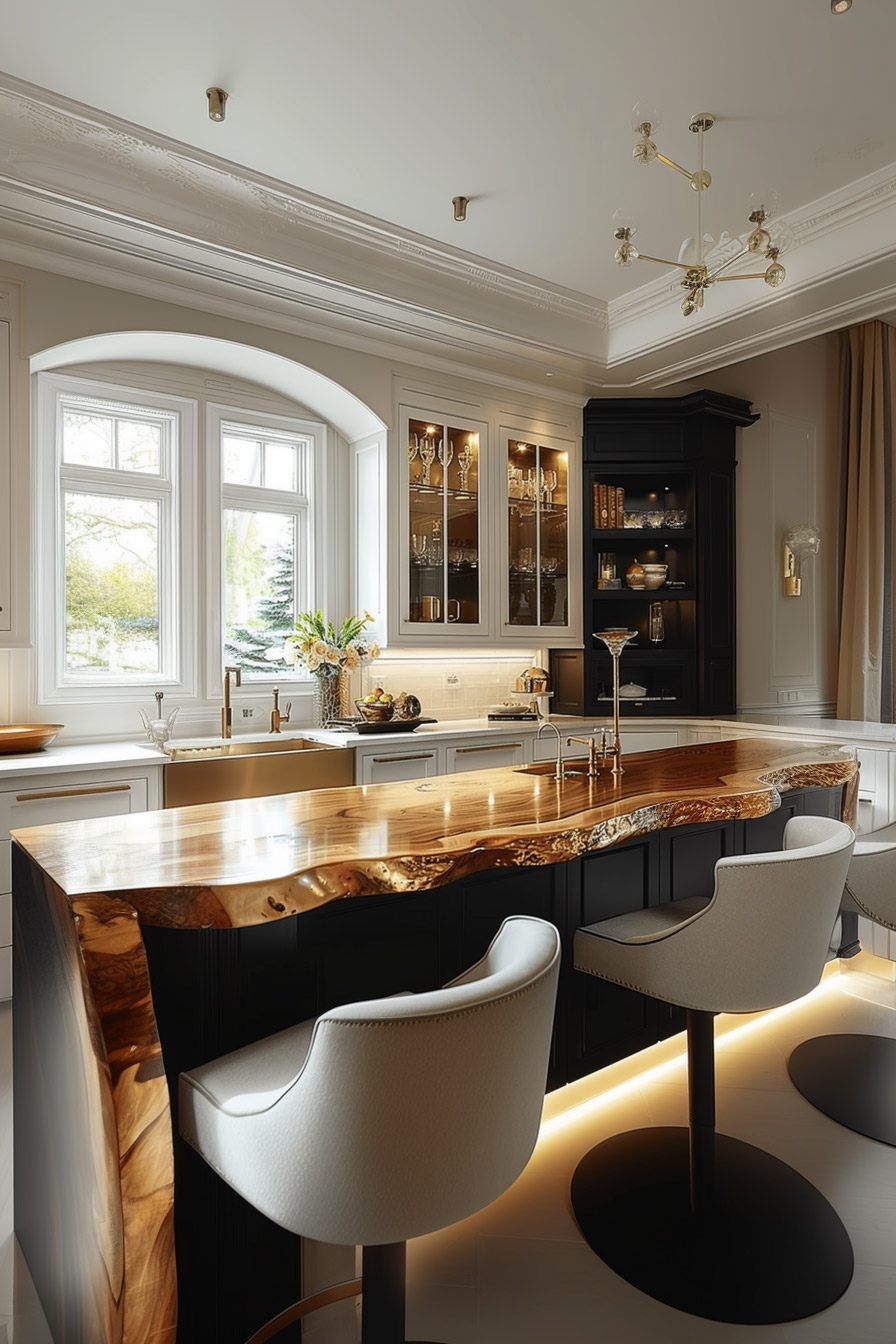
Go Big or Go Home: A thin live-edge slab can look like a mistake. For a kitchen island, aim for a thickness of at least 2 to 3 inches. It needs that visual “heft” to anchor the room.
-
Lighting Matters: Use directional lighting (like the lanterns in our sample image) to highlight the texture of the bark-edge. Shadows are your friend here; they define the curves.
-
Soften the Surroundings: Because the wood is so “busy” with grain and shape, keep your backsplash simple. A classic subway tile or a solid slab of stone works best. Let the island be the lead singer; the rest of the kitchen is the backup band.
Final Thoughts
A live-edge kitchen island is more than a furniture choice; it’s a commitment to bringing the outside in. It breaks the monotony of straight lines and reminds us that there is beauty in imperfection.
Whether you’re pairing it with navy cabinets like our inspiration photo or going for an all-white minimalist look, a raw-edge slab ensures that no one else in the world will have a kitchen exactly like yours.
And isn’t that the point of a dream home?


